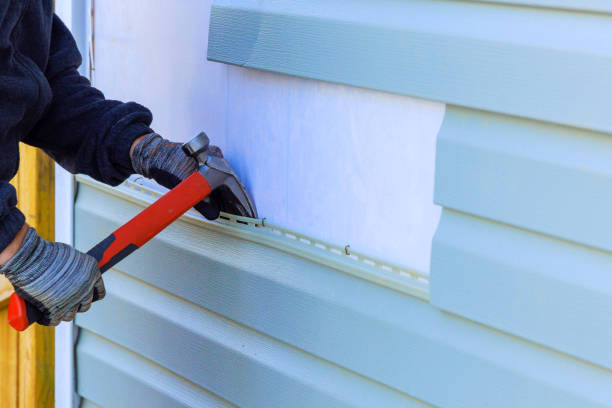
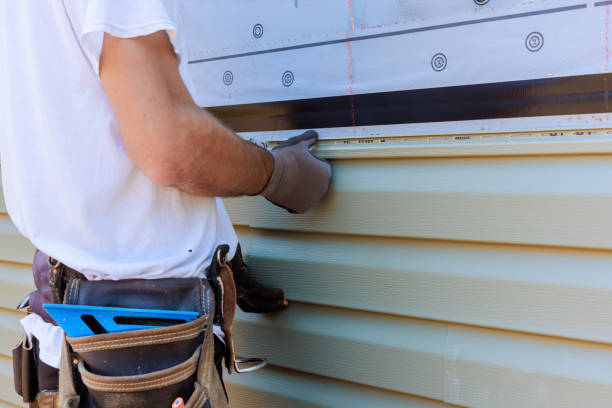
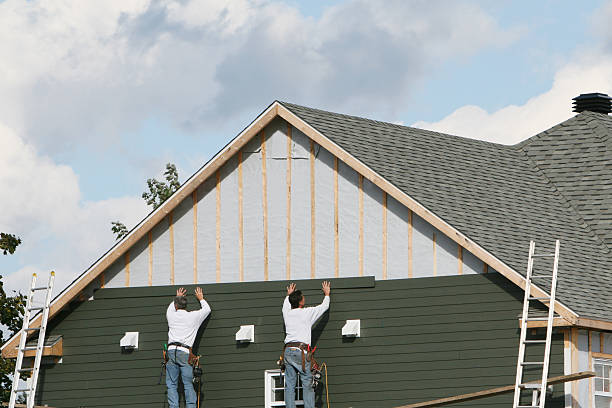
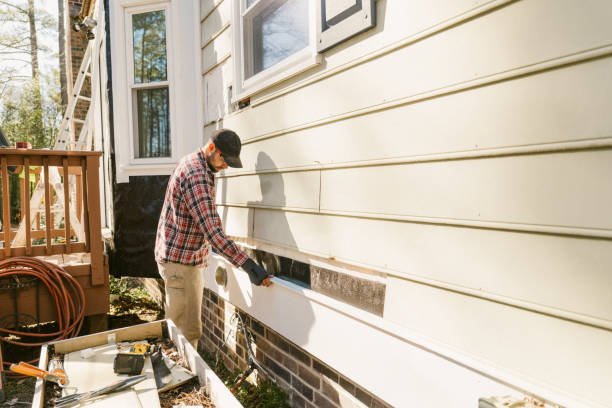
Wood siding's performance is determined almost entirely by how it was installed, finished, and sealed. Raw cedar bevel nailed too tight buckles in summer. Unprimed end-grain at butt joints wicks moisture and rots within a few years. We address both failure modes as non-negotiable practice on every wood siding project in Portland, OR.
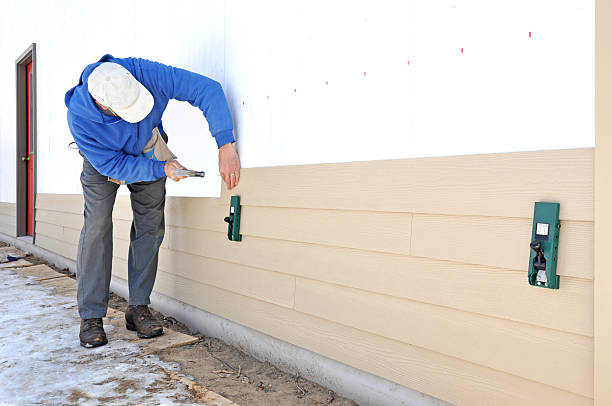
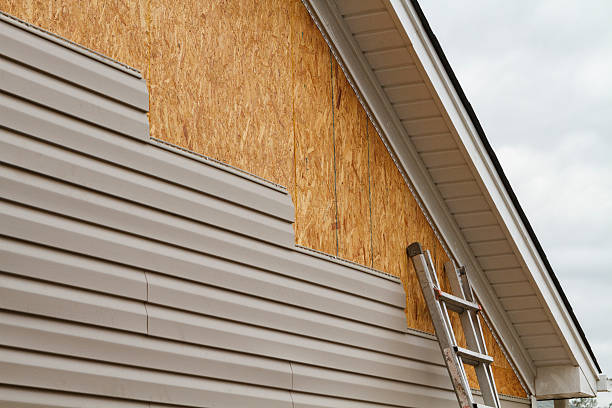
Our Portland, OR specialists bring manufacturer certification, real diagnostic tools, and written guarantees to every Wood Siding project — not just availability and a truck.
Cedar behaves differently from redwood, and engineered wood strand composite behaves differently from both. We match the installation technique to the species — not one approach for all.
Every field cut and all exposed end grain is primed before the board goes on the wall. This single practice is the largest determinant of paint longevity and rot prevention on wood siding.
We test delivered lumber with a pin-type moisture meter before cutting begins. Material reading above acceptable moisture content is stacked with stickers and acclimated on-site before installation.
State-licensed contractor in OR with GL and workers' comp. License number and certificates available at first contact.
We don't farm out subservice work. Every Wood Siding project in Portland, OR is assigned to a technician with documented experience on that specific scope.
4" to 12" custom widths, back-primed before installation, nailed with hot-dipped galvanized ring-shank fasteners at the correct position relative to the top edge of the course below. 1/8" expansion space left at all butt joints — regardless of the ambient temperature on install day.

Hand-split or sawn cedar shingles require a specific nailing pattern, exposure depth calibrated to shingle length, and self-adhering water-resistive membrane at every course break for high-moisture Portland, OR exposures. Sidewall shingles are not roof shingles — the installation is distinct.

Wood strand composite panels offer wood aesthetics with meaningfully better dimensional stability and moisture resistance than natural wood. Field cuts require sealing with the manufacturer's specified caulk or primer — we treat them with the same care as natural wood end grain.

Vertical profiles require correctly located blocking behind every vertical seam for solid fastening, Z-flashing at all horizontal transitions, and proper clearance to grade at the foundation line — a clearance most crews leave to guesswork.

Structurally sound wood siding with failing finish can often be saved through proper power washing, sanding, end-grain sealing, and a quality exterior finish system — at a fraction of replacement cost. We assess candidacy for refinishing honestly at the site visit.

We work with custom millwork suppliers to match discontinued or historic clapboard profiles for restoration projects in Portland, OR's historic districts. Preservation office approval requirements vary by municipality — we've navigated this process for multiple OR properties.

Our Portland, OR team follows the same documented process on every project — so you know what to expect at every stage.
We discuss aesthetic goals, review moisture exposure profile on each wall elevation, and recommend species and finish system for your specific Portland, OR microclimate, sun exposure, and HOA or preservation requirements.
Delivered lumber is pin-tested at multiple boards per bundle. Material reading above acceptable MC is stickered for airflow on-site. Installation begins only when moisture content is within the appropriate range for Portland, OR's current conditions.
All back faces and field cuts primed before panels go to the wall. Installation proceeds with correct nailing position, expansion spacing, and stagger pattern appropriate to the species and profile. No nail through the face of a panel.
Two finish coats applied after installation — primer plus topcoat or two topcoats over field-applied primer depending on product. End-grain joints sealed with high-movement paintable elastomeric caulk. Final walkthrough by elevation at project completion.
Every piece was back-primed before it went on the wall — the installer showed me what he was doing and why. Four years later the paint is in perfect condition. That priming discipline is what determines the outcome at year 10.
The profile matching was seamless — you cannot tell the new section from the original. That requires more than just the right millwork; it requires someone who knows how to install it correctly at the transition.
Expansion space at every butt joint, correct nailing position documented on a diagram for our records — the installation detail was exactly what I'd read the specification requires. It's rare to find a crew that actually executes what the manual says.
Our previous wood siding had failed completely at the paint because the original installer hadn't back-primed. Forge Siding identified the root cause, stripped the failing finish, back-primed all panels in place, and re-coated. Three years — no paint failures.
Our Portland-based team handles every Wood Siding project in the service area with fast dispatch, local familiarity, and practical ability to return quickly for any follow-up.
Serving zip codes including: 97227 97221 97220 97229 97203 97202 97201 97206 97205 97204 97209 97208 97258 97266 97218 97236 97232 97233 97230 97239 97219 97214 97215 97216 97217 97210 97211 97212 97213 97207 97228 97238 97240 97242 97250 97251 97252 97253 97254 97256 97280 97282 97283 97286 97290 97291 97292 97293 97294 97222 97223 97224 97225 97267
Real wood, properly installed — call our Portland team for a species consultation and detailed written scope.
📞 Call Forge Siding Now